Powered By Blogger

Wednesday, July 27, 2011

Bucharest(București), Romania - Day 2

     On our second day in Bucharest, we visited the Parliament building. It's an old relic of the communist regime and cost $3.3 billion to build, which nearly bankrupted the country. It has 1,100 rooms, is 12 stories tall, has staircases that were designed to fit Ceausescu's stepping pattern, and is the second largest building after the Pentagon. We didn't take too many pictures inside because we didn't pay the fee to take pictures. Occasionally we would sneak them when the guide wasn't looking if the room was quite spectacular. 

     The view from the Parliament balcony is amazing and peers right down one of the main streets in the city. The buildings across from it were designed to compliment the Parliament. There were lots of cool lampposts like the one pictured below lining the street. We had a nice walk because the sidewalk along the street is nicely shaded. At the other end of the road is the Piaza Unirii. It is where the city sectors intersect and was a boulevard used as a celebration road for communism. It's kind of strange how the city is divided into parts called sectors. It gives off a military feel.
     We went back to the same restaurant to try some other dishes because the food was quite cheap and good. We walked through more of the historic part of town. Some of the streets were torn up and being repaved. Others were lined with tons of outdoor cafes and restaurants. We walked back by the University because we found out that the square around it was the home to a famous protest that started the revolution to overthrow the communist regime. The university dates back to 1864. A few blocks away are some of the more famous, classic buildings of Bucharest. The round Romanian Athenaeum from the late 19th century is the city's concert hall. The funding for the project was provided by private donations and a campaign to have the public contribute 1 lei to help build it.
     Down the street from the Athenaeum is the National Art Gallery. It's housed in the old royal palace. It was damaged during the revolution of 1989 and only parts of it were recently reopened in 2000 to the public. Since we had been walking all day, the thought of more walking through a large museum just seemed out of the question. We checked the list of paintings that were there and none of them really excited us. Directly across the street is a nice university building with a statue of King Carol of Romania riding on a horse. 
     This last picture is just to show the crazy network of power lines. All throughout Sofia and Bucharest, there were tons and tons of power lines hanging everywhere. The couple we were staying with told us that the city was trying to put all of the power lines underground and that it looked crazy for the time being. This building is near the university and is just one intersection where there are tons of power lines everywhere.
     We spent the evening cooking and spending time with our couchsurfing hosts. We wanted to spend more time with them because it was our last night and they were really nice. We cooked a jamabalaya and chatted about kids and education differences between the US and Romania. It was one of those nights you don't want to end but we had to get to sleep early because we had an early train to catch to the small town Sinaia.

Tuesday, July 26, 2011

Bucharest(București), Romania - Day 1

     After our long train ride from Sofia, we finally arrived to Bucharest. The city's name in a recorded form appeared during the rule of the infamous Vlad the Impaler. He inspired the Dracula stories. Just over 20 years ago, the city was host to a revolution that overthrew their communist dictator, Ceausecu. He bankrupted the country trying to build a palace to outdo the North Koreans. Priorities. He starved his own people to export food to the world and put forth a positive front. He's a friendly reminder of why one man, no matter the political affiliation, cannot be put in charge of a country. We met our couchsurfing hosts for our time there. They are a fun couple and she has a great project that allows you to experience authentic village life in Romania. They set us up in a bedroom at their apartment and then sent us forth with a guidebook of the city and a list of places to see. We took the metro to the local University. The first thing we found was this nice Russian Orthodox Church. We wandered through the old historic part of the city in search of a restaurant that our hosts highly recommended. 
     After a short walk through the historic part of town, we went to Cara cu Bere. It looks and feels like an old German beer hall. We discovered through reading the Romania book we were given that the local dishes include some things similar to what we have back home. Apparently, Romanians love a dish that is basically grits with cheese. They call it polenta but its more similar to grits than polenta. The dessert was a large doughnut covered with jam, cheese, and sour cream.
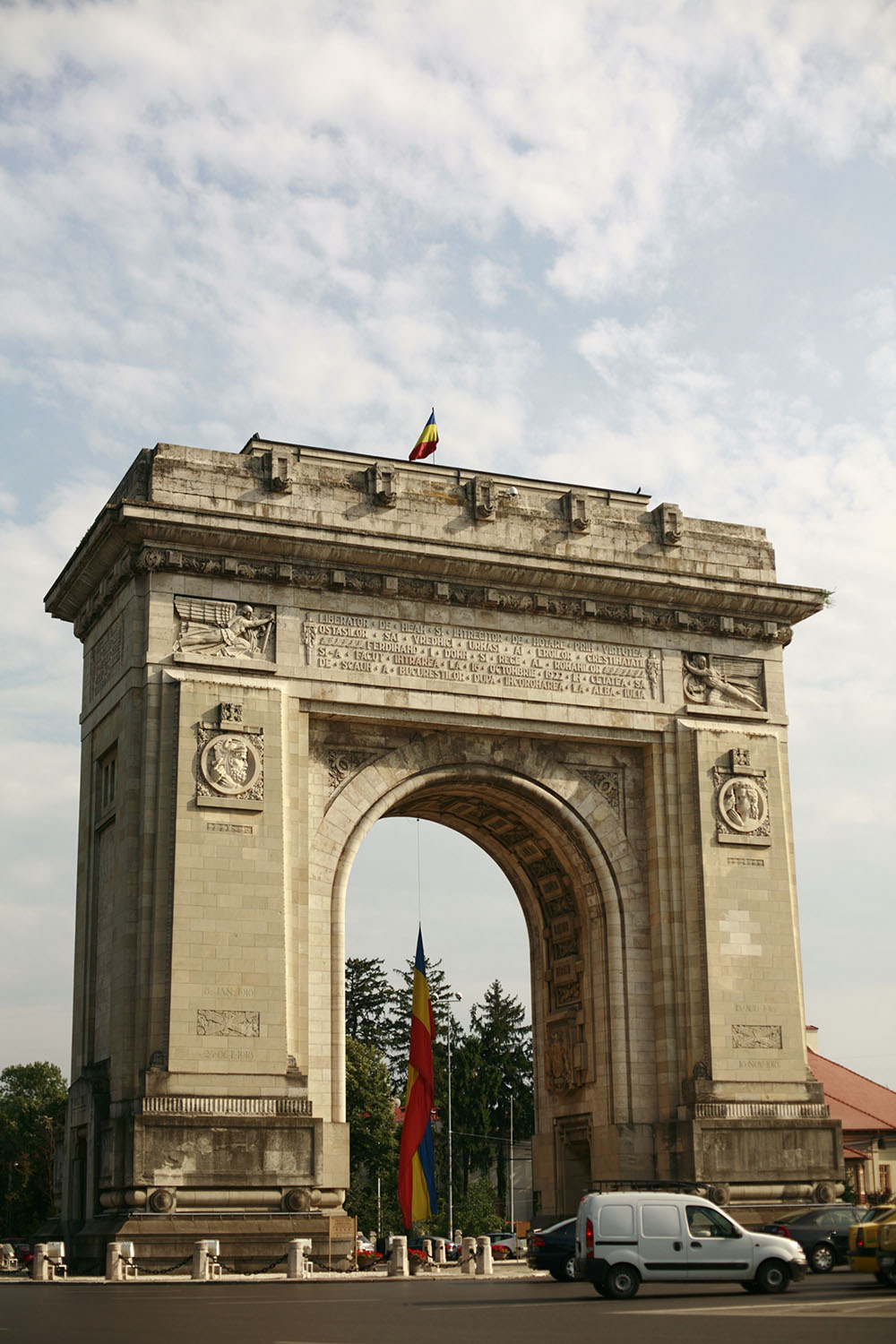
     After lunch, we tried to visit the Parliament building but it closed at 4. We decided to try out the other recommendation from our hosts, a village museum in the northern part of the city. The basic premise of the museum was to collect houses and other buildings from villages from all over the country and put them on display in an open air museum in Bucharest. It sits right alongside a park with a lake and is a fantastic place to visit. There are lots of activities for kids too. We found a large Arc de Triomphe modeled after the one in Paris. It celebrates the independence of the country in 1878. The first arch was built quickly and of wood until the current structure could be completed.
     After our long walk through the park, we were pooped so we caught a bus back to the metro. Once there, it was just ten minutes back to our hosts house. When we arrived, we rested for a while until one of them invited us for a bike ride around the park just around the corner from their house. It was a nice way to end the day.